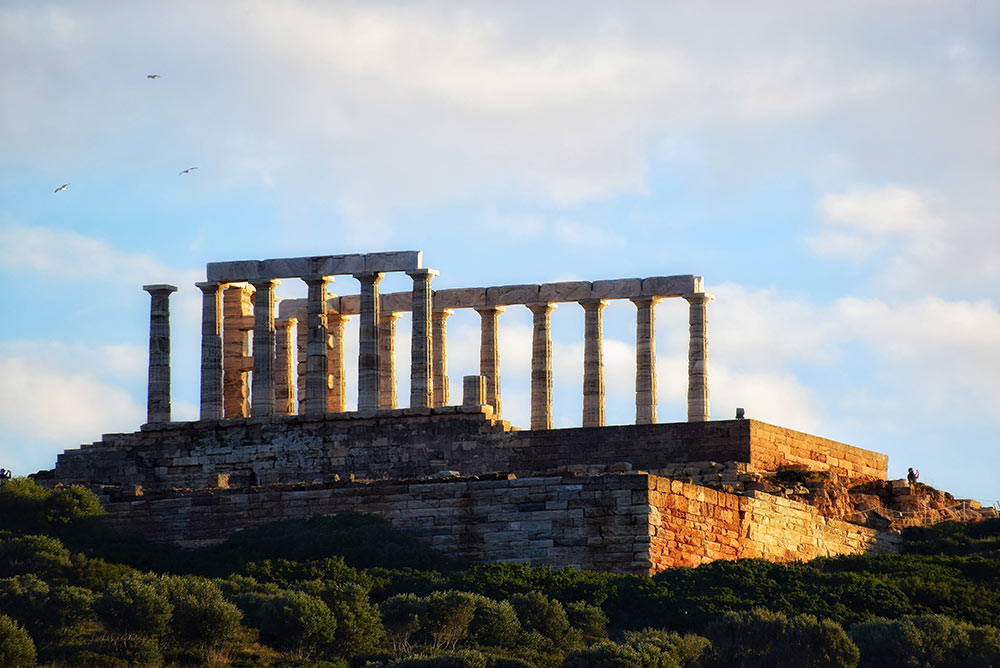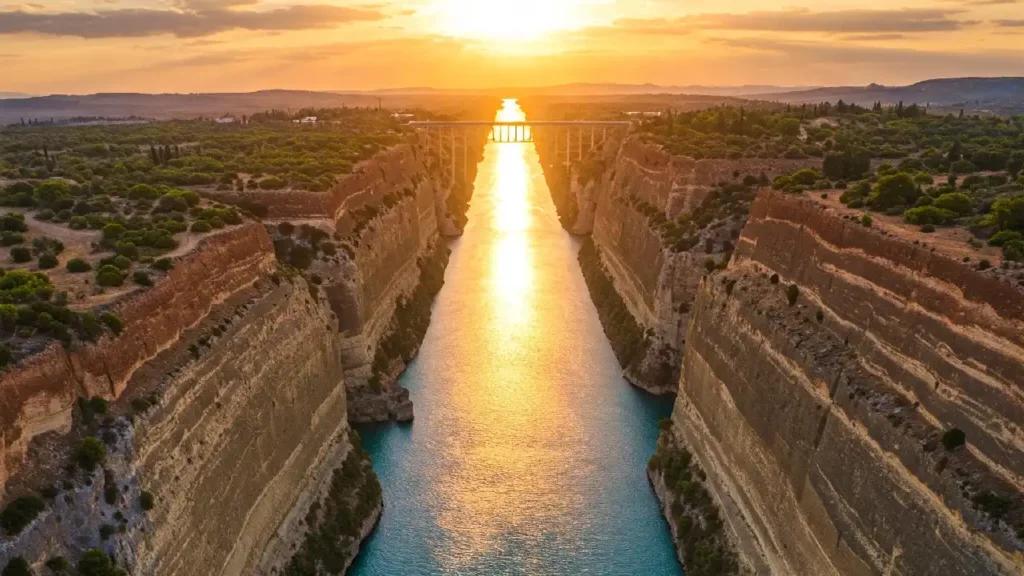
Leaving Athens behind, you travel toward central Greece, passing through rural roads and mountain foothills until you reach Delphi, nestled on the slopes of Mount Parnassus. Delphi was regarded in antiquity as the “navel of the world,” the spiritual and religious center where the oracle of Apollo delivered prophecies — a place where myth, faith and politics intersected.
Exploring the archaeological area offers a powerful sense of history. The remains of the Temple of Apollo, the ancient theatre, the sacred way, and the ruins scattered across mountainside terraces make it possible to imagine how pilgrims once walked these grounds seeking answers from the divine.
The journey continues with a visit to the Delphi Archaeological Museum, one of Greece’s most important museums. There, treasures from the site — statues, friezes, votive offerings — offer deeper insight into the life and beliefs of ancient Greece. Among its most celebrated exhibits is the bronze statue known as the Charioteer of Delphi.
As evening falls, the contrast between the mountain’s calm and the echoes of ancient civilizations leaves a lasting impression — a reminder of how central Delphi was to the ancient Greek world.
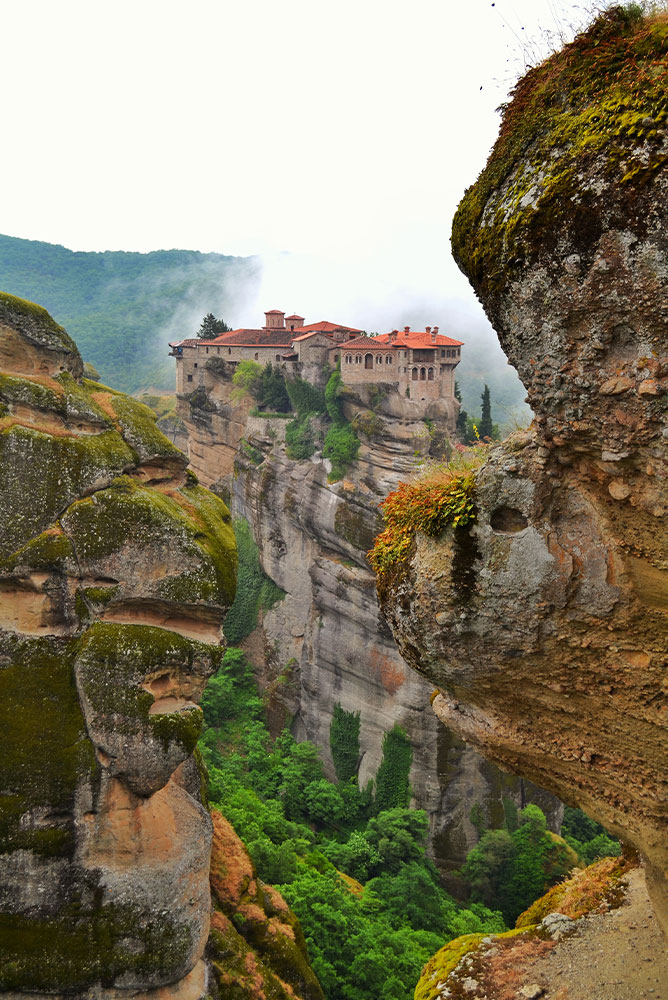
On the second day the journey leads toward central Greece again, this time reaching the extraordinary landscape of Meteora. Meteora is a geological wonder: towering rock formations rise from the Thessalian plain, and on their summits stand monasteries built centuries ago.
Walking among the monasteries and looking out over the valley offers a different kind of awe — where human faith met natural grandeur. The monasteries of Meteora traditionallly served monks seeking solitude and spiritual retreat, and their precarious placement atop steep rocks testifies to resilience and devotion.
The view from above reveals a landscape shaped by time and tectonics: broad plains, distant mountains, and rock towers that seem to defy gravity. Here, history is not only found in ancient stones, but in the geological layers and natural formations that frame every monastery.
This contrast — between the ancient worldly significance of Delphi and the spiritual, otherworldly atmosphere of Meteora — captures two very different souls of mainland Greece.
The path from Delphi to Meteora shows how Greece’s identity often merges mythology with landscape: from the oracle’s sacred warnings at Delphi to the monasteries perched between earth and sky at Meteora. In Delphi, you connect with the myths, rituals, and politics of ancient Greece; in Meteora, you see how faith, nature and monastic life transformed the meaning of place over many centuries.
Traveling across these regions also offers a sense of variety — mountain slopes in Phocis, the plain of Thessaly, rock pillars rising dramatically from the earth — a testament to Greece’s diverse geography and cultural layers.
When visiting these places, consider that exploring Delphi requires walking on uneven terrain with some elevation change, while Meteora involves paths and stairways climbing steep rock formations. Comfortable shoes and a spirit of calm discovery help. Sunrise or late afternoon visits to Meteora often offer memorable light and atmosphere, while the history and collection at the museum in Delphi give depth to the storytelling of the ancient world.
We’re a small team with a big love for Greece — and for helping you experience it your way. From private Athens tours to transfers and custom holiday packages, we combine local knowledge with personal service to make your trip easy, flexible, and unforgettable.